
Advisory Circle 2: National Indigenous Scholars Circle
A circle of early career, emerging, and recently tenured Indigenous scholars co-developing the NCIS faculty development model.
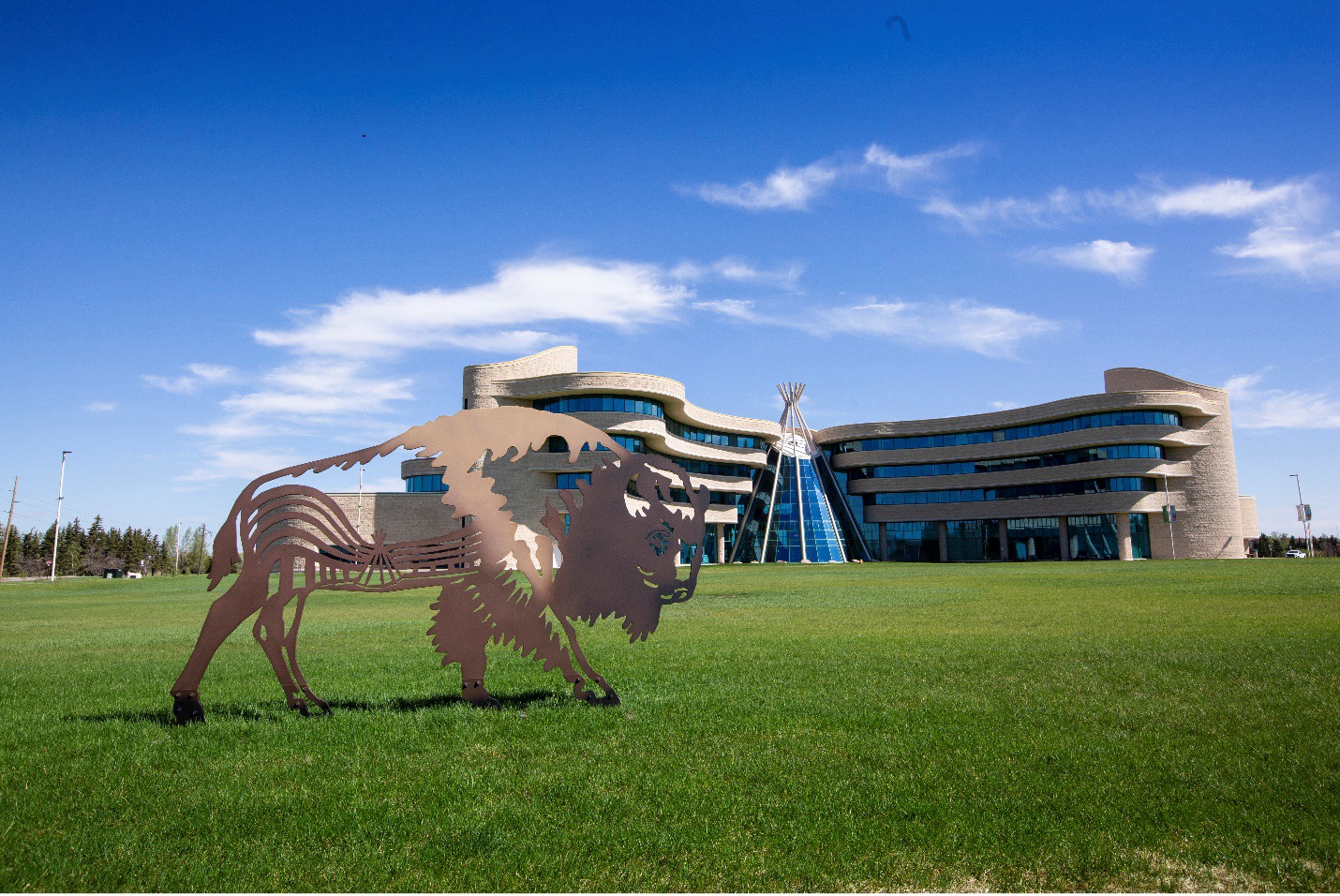
The National Indigenous Scholars Advisory Circle brings together early, emerging, mid-career, and recently tenured Indigenous faculty who will help shape a faculty development model that reflects the realities of their careers. Their lived experience informs the program’s design, offerings, and evolution over time.
Current Members
Karen Pheasant-Neganigwane, PhD(c) (Chairperson)
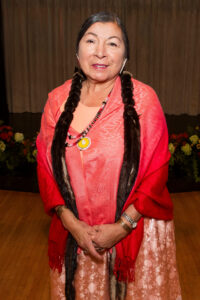
Pheasant-Neganigwane’s Western knowledge is from Laurentian University, Sudbury, On. Her graduate studies are from the University of Alberta, MEd (2013) and in finalization of a Doctorate (PhD) degree in Policy Studies in Education. Karen is Anishinaabe of the Three Fires Confederacy (Ojibway, Odawa, and Pottawatomi), of the Great Lakes Tribal region. She is a Wikwemikong First Nations member of Manitoulin Island. Her Learned Life Experiences (LLE) and Western education are rooted from the land of which she thrives on. Aside from the Great Lakes (Toronto), she has lived, and places value on the earned knowledge on being within Treaty Three: Lake of the Woods; Treaty Six: Edmonton and Treaty Seven: Calgary/Banff/Lethbridge – all of which contribute to her expressions, be it academically, culturally, and/or artistically.
In Pheasant’s early years, she critically engaged with social action and Indigenous activism, through the resistance movements of the Red Power Movement. Dance has taken her across North American, and across the world – a life full of enlightenment. A highlight is performing at the Columbus Quincentenary (1992) the 500th anniversary in Mexico City, in resistance of colonialism, the 100th 1996 Atlanta, Georgia Olympics, also with the Barrage Dance Theatre gathering in Sydney, Australia (2000), and as a guest artist w/Banff Centre: Indigenous Arts program since 1996. She honors her Indigenous dance background to providing a foundational influence on all elements of both her personal and professional life practices, as an author, artist and an academic. Included with her aesthetic expression, is her award-winning book – Powwow: A Celebration Through Song and Dance (2021). She is a knowledge keeper of the Shiibaashka’igan (Jingle Dress), and first degree in the Anishinaabe Midewin Lodge.
In 2023, a historical moment happened when Karen Pheasant-Neganigwane was inducted into the Canadian Dance Hall of Fame. It was the first time; a non-contemporary dancer was recognized for their dance contributions within Canada. She was the first Indigenous Woman to be recognized within the Indigenous dance form of Pow-wow.
Dr. Christine Webster
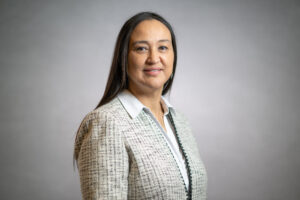
Dr. Christine Webster (she/her) is a Nuu-chah-nulth scholar from the Ahousaht Nation and an Assistant Professor in the Department of Educational Psychology and Leadership Studies in the Faculty of Education at the University of Victoria, Canada. Her research explores the intersections of Indigenous knowledge systems, leadership, and higher education, with a particular focus on knowledge mobilization and culturally grounded approaches to teaching and learning.
Dr. Lyn Trudeau
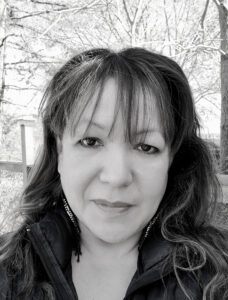
Dr. Lyn Trudeau is an Assistant Professor at Brock University. She is Ojibway-Anishinaabe from Sagamok Anishnawbek First Nation, Eagle Clan. She is cross appointed with Women’s and Gender Studies/Sociology, and affiliate of Social Justice and Equity Studies. Her research is through a decolonial lens to honour her cultural background; therefore, embeds Indigenous knowledge and ways of being in her classrooms and research endeavours. Lyn is also an artistic scholar who engages arts-based research to include creative expression, visual presence, and cultural representation within her works as acts of cultural survivance.
Dr. Tracey Lauriault
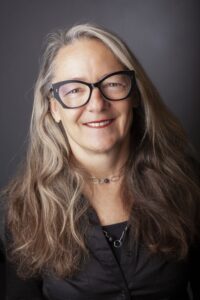
Dr. Tracey P. Lauriault, Associate Professor, Critical Media and Big Data, School of Journalism and Communication, Cross Appointed to the MA in Digital Humanities and is Faculty of the Institute for Data Science. Dr. Lauriault is a critical data studies scholar whose current research includes digital twins, data brokers and climate data hubs. As a publicly engaged scholar, she mobilizes her research into data and technology policy in all sectors and as a data and technological citizen, she examines large and small complex systems with the hope of making them more just, inclusive, equitable and environmentally sustainable.
Dr. Yvonne Tiger
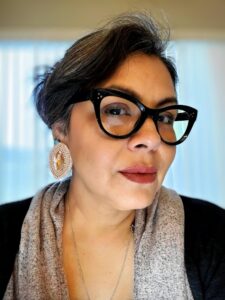
Yvonne Tiger is a Citizen of the Cherokee Nation of Oklahoma and descended from the Seminole and Mvskoke Nations. As a first-generation college graduate, she holds an AA from NVCC, AB from Smith College, two MAs from the University of Oklahoma, and a PhD in the Cultural, Social and Political Thought from the University of Lethbridge. Her research connects Cherokee pottery to the land in kinship to her mound-building ancestors, and situates it as a place-based art. She positions her scholarship in Indigenous refusal and has structured an ethical methodological approach to her Indigenous citational practice. She is a published Indigenous art historian and Indigenous Studies scholar who teaches both Indigenous and western courses. She’s held fellowships at the Peabody Essex Museum, with the Momus Emerging Indigenous Critics Residency, Otsego Institute for Native American Art History, interned at the Canadian Museum of History and was part of the inaugural SAR/Getty Indigenous Art History consortium. She is currently an assistant professor at MacEwan University.
Dr. Jarita Greyeyes
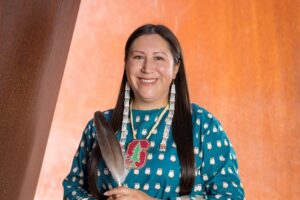
Dr. Jarita Greyeyes (she/her) is nēhiyaw of the Muskeg Lake and Red Pheasant bands of the Cree nation in Treaty Six territory and an intergenerational survivor of the residential and day school systems. Jarita completed her doctoral training at Stanford University’s Graduate School of Education and received her PhD in Sociology of Education and Race, Inequality and Language in Education in 2024. She was a 2019-2022 Pierre Elliott Trudeau Foundation scholar and a Stanford University DARE (Diversifying Academia, Recruiting Excellence) Doctoral Fellow. Before attending Stanford, she received degrees from the University of Winnipeg and University of Victoria and was the acting Associate Vice-President-Indigenous Affairs at the University of Winnipeg. As an Assistant Professor of Indigenous Studies at McMaster University Dr. Greyeyes’ research focuses on the indigenization of the academy. In 2025 she founded the Greyeyes Indigenizing Research Lab. Currently, the lab is working on two Social Sciences and Humanities Research Council funded projects and Jarita is the recipient of McMaster University’s Faculty of Social Science Scholar in Community Fellowship.
Dr. Norma Dunning
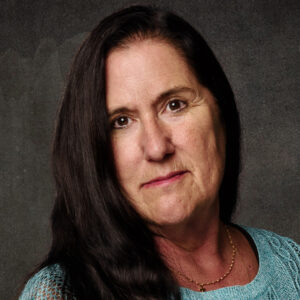
Dr Norma Dunning is a Padlei Inuk writer, professor and grandmother. She writes in fiction, nonfiction, prose and poetry. She has published six books since 2018, all of which focus on Inuit Canadian issues. She lives and works in Regina, SK where she teaches for Indigenous Studies at First Nations University of Canada.
Tyler Armstrong, PhD(s)
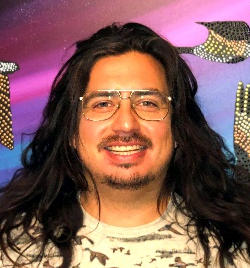
Tyler Armstrong has devoted his professional and academic life to the betterment of the First Nation population. First and foremost, he is a Shkaabe (helper) to his people and is a member of Michikan Lake First Nation within Nishnawbe Aski Nation. Tyler has completed his Master of Education degree with a Specialization in Indigenous Education with a thesis that examined if Indigenous ways of knowing, seeing, doing and being contribute to an Indigenous scholar’s success, and a Master of Social Work Degree – Indigenous Field of Study that focused on wholistic healing. Currently at Lakehead University, Tyler is the Program Coordinator for the Keewatinase Indigenous Teacher Education Program (KITEP), a program in which he helped to design. He is also a PhD student in the Joint PhD in Educational Studies at Lakehead University with a focus on Indigenous education program development.
Kelvin McKay
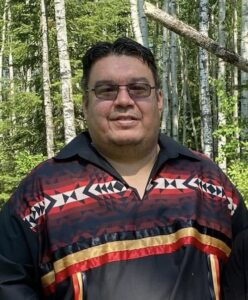
Kelvin is a valued member of the University College of the North staff since 2023. Most recently, he served as an Instructor and Program Coordinator for the Pathways to Post-Secondary Program UCN.
As a Knowledge Keeper and fluent Cree speaker, Kelvin brings a wealth of experience to the advisory group. He is deeply committed to advancing the Indigenization of curriculum and is passionate about supporting faculty in the meaningful integration of Indigenous knowledge, perspectives, and pedagogical approaches across curriculum and teaching practices. Kelvin is from Pimichikamak Cree Nation also known as Cross Lake First Nation.
Jennifer Grenz